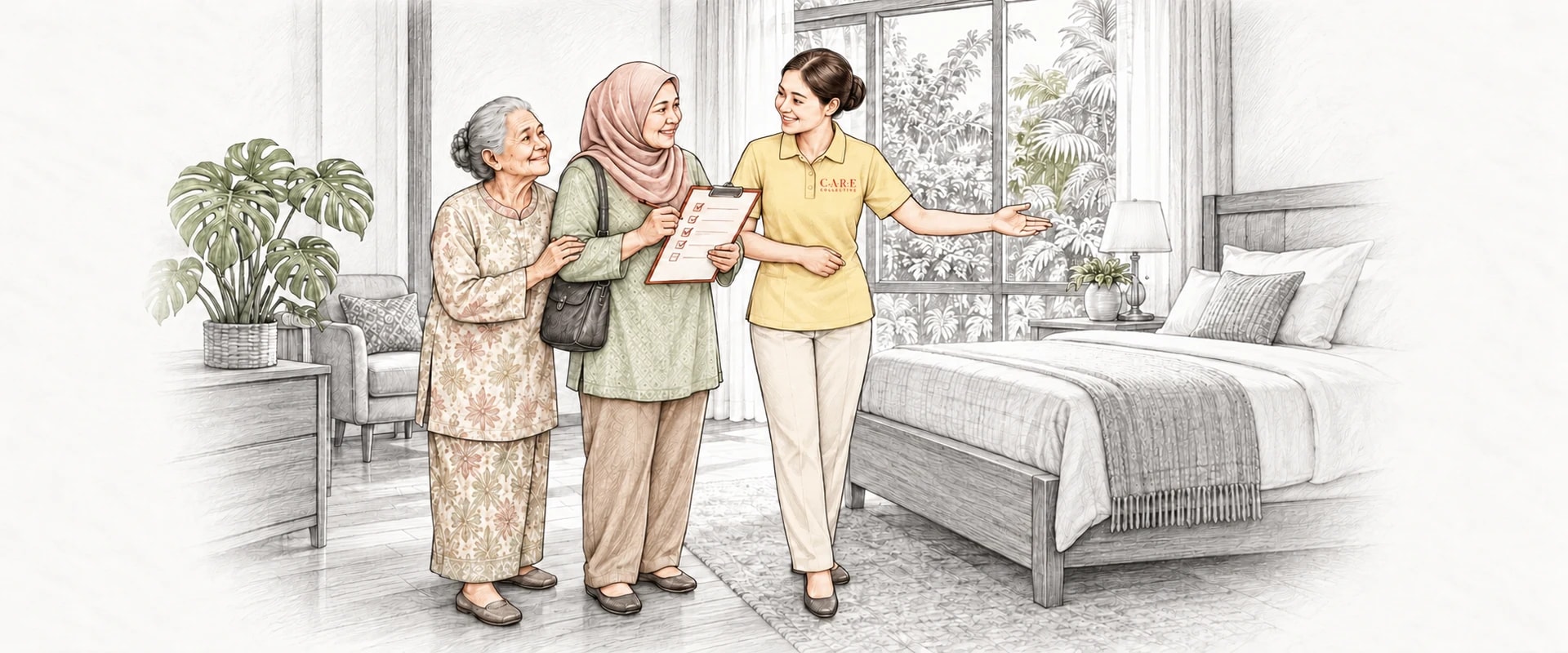
If you have no shortlist yet, start with part one: it compares the eight nursing homes and care options in Kuching and what care costs there.
Which care setting fits your situation?
The right care setting follows the hardest part of the day: help needed through the night points to assisted living, and help needed only in the daytime may mean day care is enough. These four questions narrow it down before a formal care assessment.
Four questions, in order
Answer from the top. The first yes names the setting to start with.
If yesThe higher-support end of assisted living Most people call this a nursing home. Ask which of medicines, wound care, catheters or feeding tubes it handles on site.
If yesAssisted living Confirm in person who is awake overnight, and what they can handle.
If yesIndependent living or assisted living Compare the two, and ask how support can grow without another move later.
If yesDay care It may be enough for now, with evenings at home as they are.
Answer question 1 to begin.
Use this to sort the options. A care assessment confirms them before you accept a quote.
What should you check before choosing a care home?
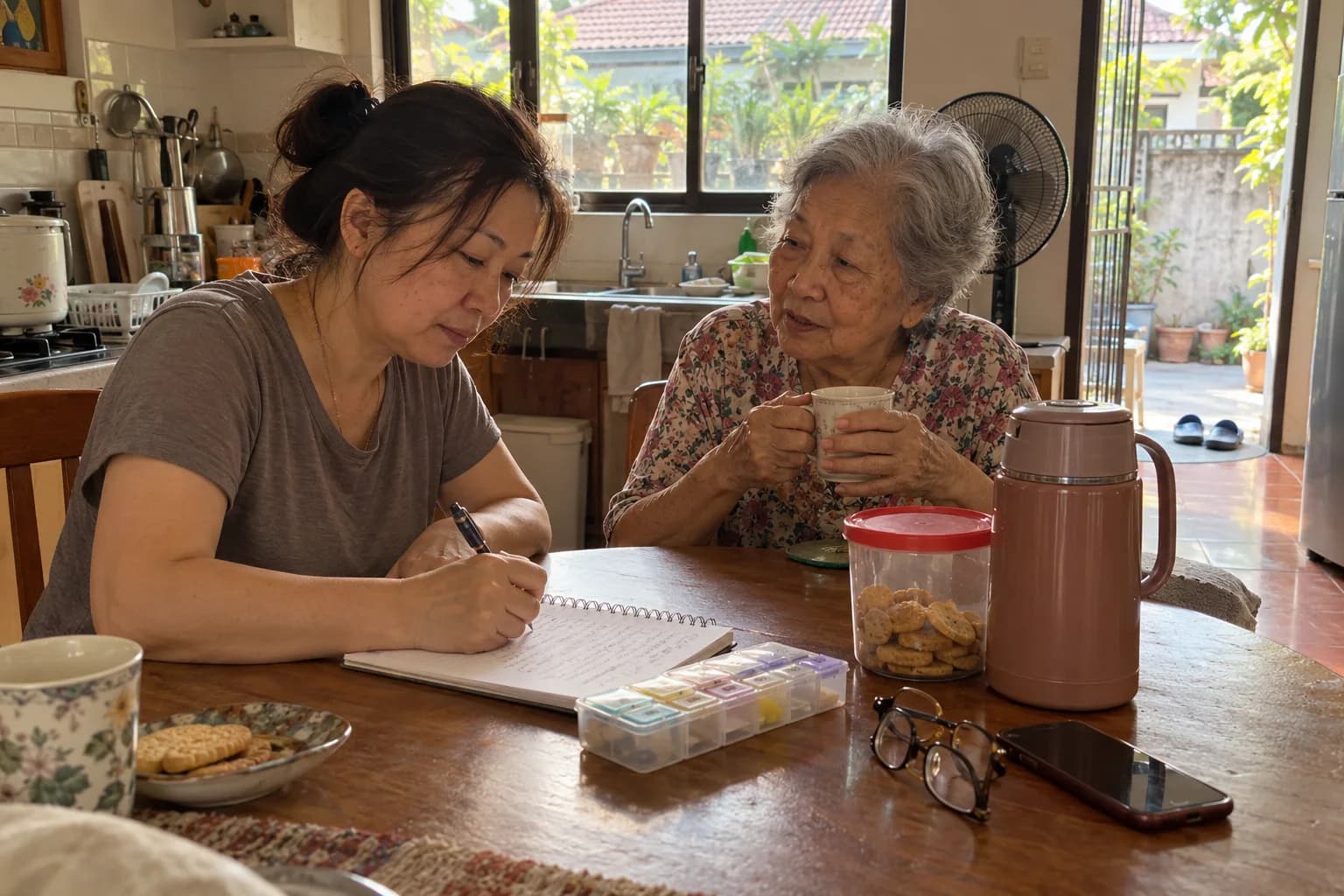
Before choosing a care home, check five things at every place: the care it can handle, who is on duty at night, its registration and licence, how it runs on an ordinary day, and the whole cost in writing.
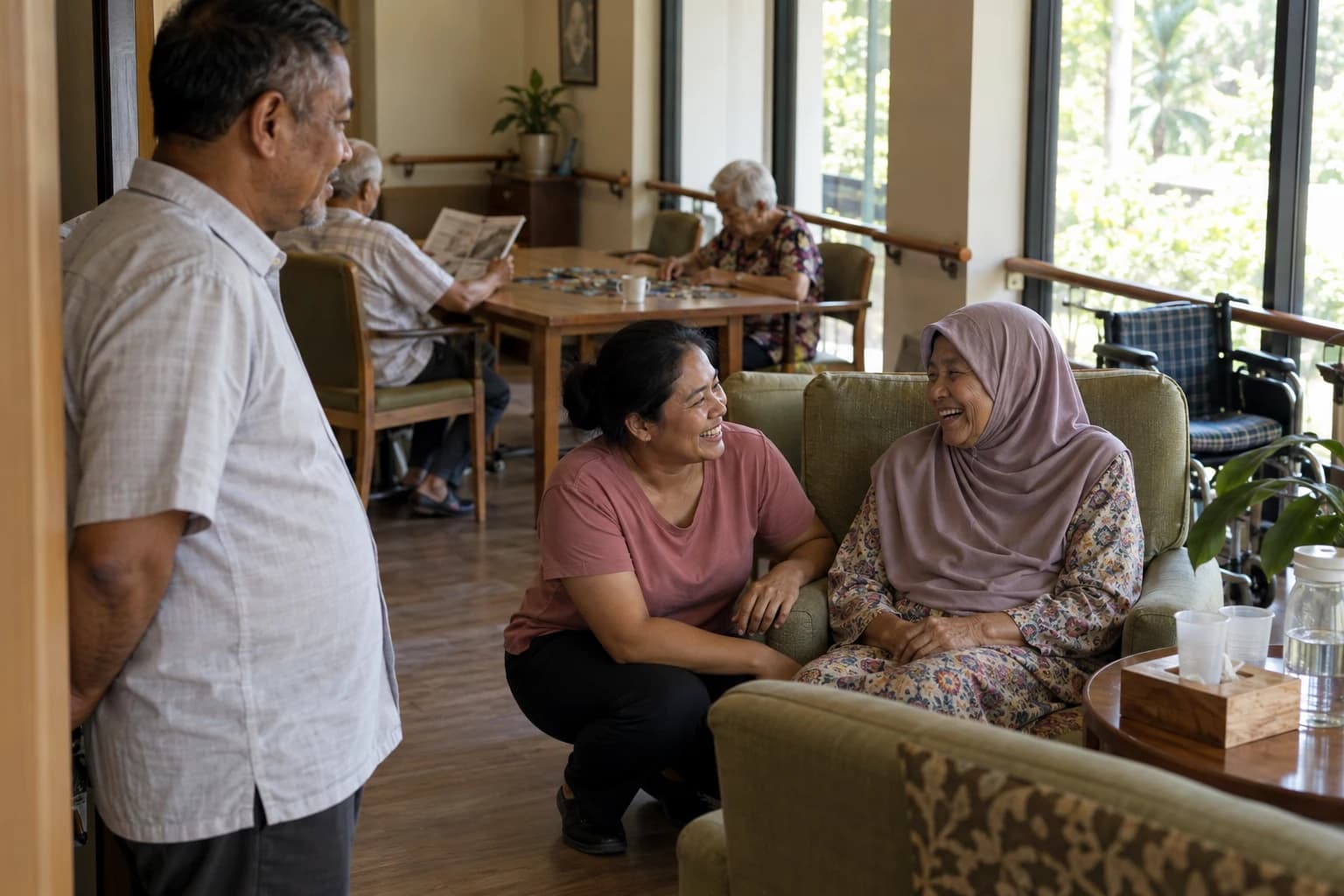
1. Match the care level first
Write down what help is needed on an ordinary day:
- Bathing
- Dressing
- Eating
- Using the toilet
- Getting in and out of bed or a chair
- Walking
- Medicines
- Wounds
- Changes in memory or behaviour
2. Ask who is on duty, day and night
Ask each provider3. Check the registration and the licence
Care centres are registered and inspected under the Care Centres Act 1993. Ask to see the papers that apply:
Does it run as a private nursing home?
NoA residential or day care centre
- JKM registrationJabatan Kebajikan Masyarakat, under the Care Centres Act 1993
YesOr it calls itself a nursing home
- JKM registrationJabatan Kebajikan Masyarakat, under the Care Centres Act 1993
- Also KKM licenceMinistry of Health, through its private healthcare rules
Source: Jabatan Kebajikan Masyarakat (Act 506); Ministry of Health (CKAPS, Act 586)
4. Visit on an ordinary day
Ask to come outside a scheduled tour slot and see the place as it normally runs.
On the visit5. Get the whole cost in writing
The monthly fee is usually not the whole bill. Ask each provider for one written quote with all three parts:
Written quoteAll in the same document
- 1Monthly fee at the care level needed todayRM
- 2What that becomes if needs go up a levelRM
- 3What is billed on top, commonly:
- Diapers
- Tube feeding
- Wound dressings
- Physiotherapy
- Doctor visits
- Hospital transport
Who helps pay for a care home in Malaysia?
Families can claim income tax relief of up to RM8,000 a year for a parent's medical treatment, special needs and carer costs when a doctor certifies the condition. Budget 2027 proposes lower service tax on elderly care from 1 January 2027. Kuching's state welfare home takes only people who meet narrow criteria.
- Income tax reliefRM8,000 a year, at most
Parents' and grandparents' medical, special needs and carer costs.
- Service tax on elderly care6% proposed from 1 January 2027, down from 8%
Registered care centres would charge none on annual fees up to RM96,000 a person, once the order is gazetted.
- Rumah Seri KenanganWelfare home
Run by the state welfare department, at Batu 12, Jalan Kuching-Serian.
- InsuranceCheck first
Ask the insurer in writing whether the policy pays for a care home.
Rumah Seri Kenangan: residents must be
- Destitute and 60 or over
- Free of infectious disease
- Without family or a carer
- Without a fixed home
- Able to look after themselves
That last condition rules it out for most people who need nursing.
Source: Lembaga Hasil Dalam Negeri; Ministry of Finance, Budget 2027 speech; Jabatan Kebajikan Masyarakat Sarawak
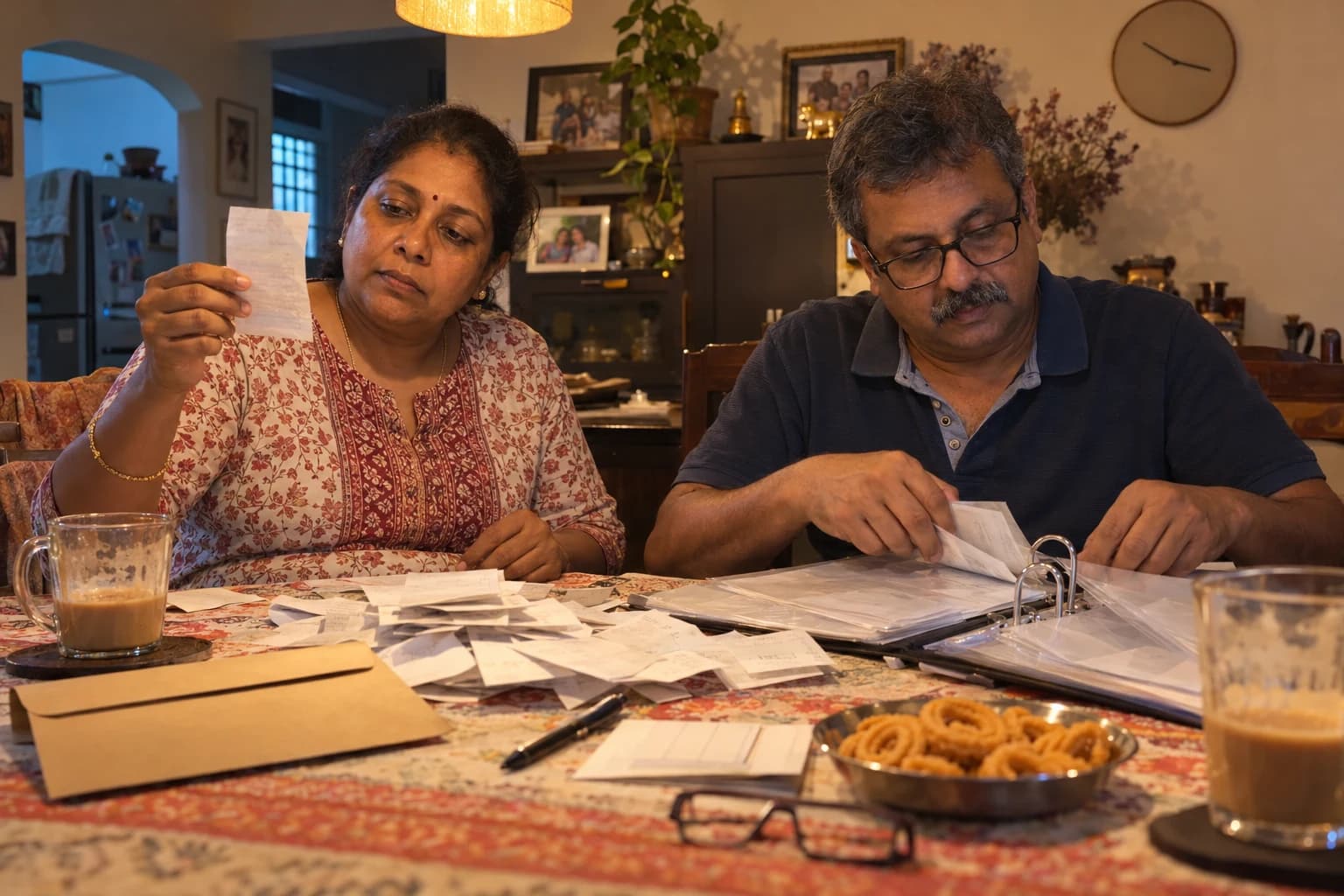
What should you do if the hospital is discharging your parent this week?
If the hospital is discharging your parent this week, get the ward's written list of care tasks, ask about a short stay, and sign nothing long-term yet.
- 1Ask the ward for the list
The discharge summary, and a written list of care tasks: wounds, feeding, catheter, medicines, how much help with moving.
WhyAny provider needs it before quoting.
- 2Ask about a short stay
Respite or short-stay care while you choose a permanent place.
WhyA short placement buys you time to choose properly.
- 3Sign nothing long-term
Not in that week, if you can avoid it.
WhyA rushed choice is hard to undo.
Some of the providers in part one list respite and short stays on their own websites. Care Collective is one of them, with short stays for recovery after hospital.

What should you ask on a care home tour?
On a care home tour, ask every place about the care it can handle, who is on site overnight, its registration, what the fee includes and what costs extra, notice and deposit terms, and diets and visiting. The twelve questions below cover each. Tick them as a place answers, for up to three places.
Twelve questions for every tour
Care
Staff and papers
Money and notice
Daily life and family
0 of 12 asked at Place 1
Anything still unticked after a visit is a question to get answered in writing before you sign. Ticks stay on this device only.
To try the twelve questions on a real visit, book a tour of Care Collective.
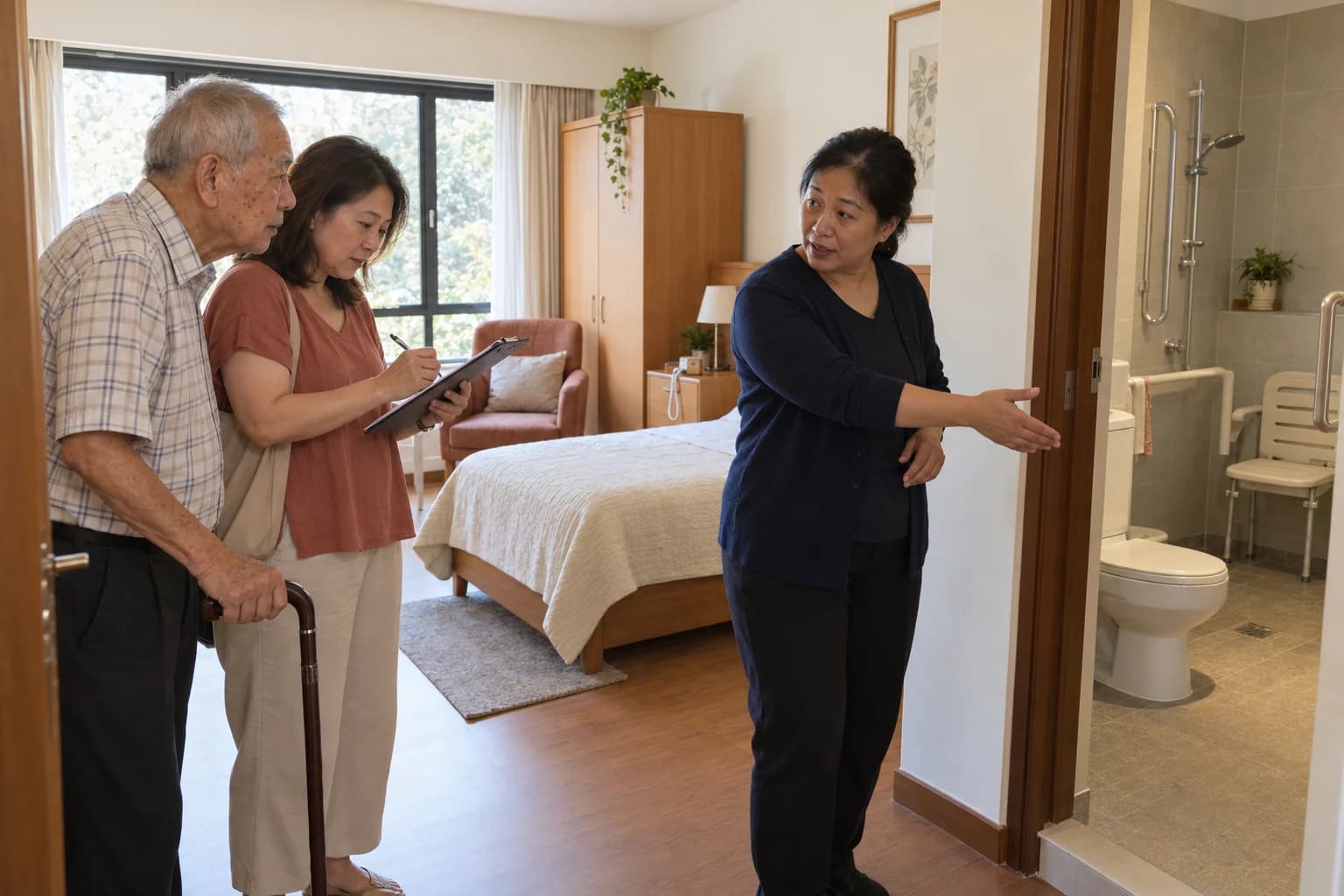
Where does Care Collective fit?
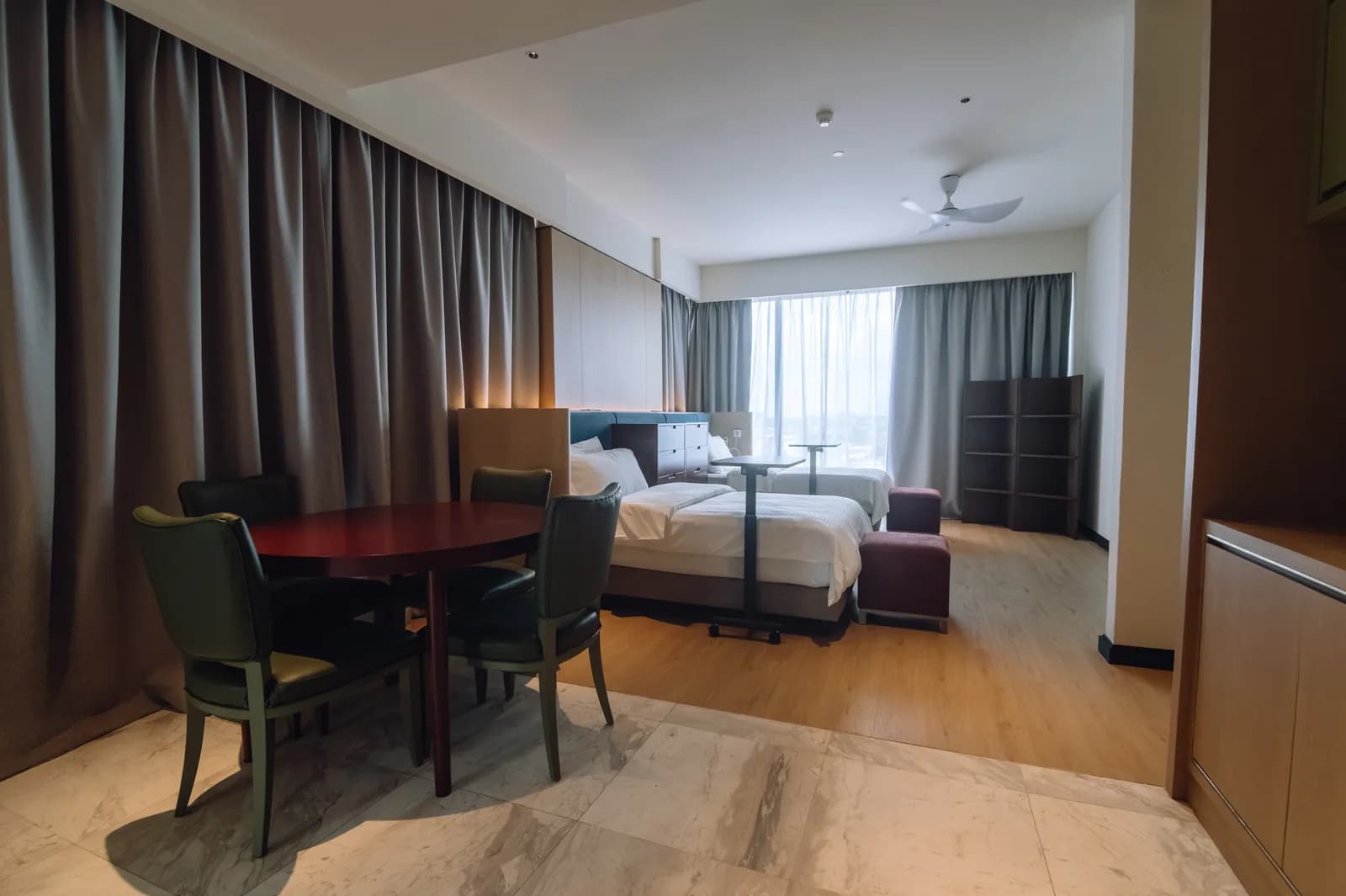
Care Collective, which publishes this guide, runs independent living, assisted living with dementia care, and a weekday Clubhouse for older people living at home, all in Wisma Elica in Kuching. Its own pages answer some of the twelve questions. Ask the rest on a tour.
For a parent with dementia, see our dementia care guide.
Ask on the tourRates depend on the suite and the care plan. See Assisted Living, the Retirement Suites or the Clubhouse.
Common questions
What is the difference between a nursing home and assisted living?
In Malaysia, a nursing home is usually the higher-support end of assisted living.
- Both describe a residence where staff help with daily life.
- A private nursing home needs a Ministry of Health licence. Beyond that, the labels are not standardised.
- Ask what help is on site, who is there overnight, and what happens when needs go up.
How much does a nursing home in Kuching cost?
Malaysian market ranges for 2026 run from about RM1,500 to RM9,000 a month. Extras for a resident needing moderate care add RM800 to RM2,500.
- RM1,500 to RM3,000 for a shared room in a basic care centre.
- RM3,000 to RM5,000 with nursing on site.
- RM5,000 to RM9,000 for a private room, dementia care or higher-dependency nursing.
- Extras include diapers, tube feeding, wound dressings, physiotherapy, doctor visits and hospital transport.
Are care homes in Sarawak licensed?
They should be, under two regulators.
- Care centres register with Jabatan Kebajikan Masyarakat under the Care Centres Act 1993.
- A place that runs as a private nursing home, or calls itself one, also needs a Ministry of Health licence.
What should I look for when visiting a care home?
Look at how the place runs on an ordinary day.
- Go at an ordinary hour outside the scheduled tour slots, and watch how staff talk to residents and how fast call bells get answered.
- Ask to see a bedroom, a bathroom, the dining area and where people sit after dinner.
How many staff should a care home have?
It depends on how much help each resident needs, so ask each place three things.
- How many residents one staff member covers, morning and night.
- Whether a registered nurse is on site or on call.
- Who decides on a hospital transfer.
Can I claim tax relief on a parent's nursing home fees in Malaysia?
Only for what the relief covers: a parent's medical treatment, special needs and carer costs, up to RM8,000 a year, with the condition certified by a doctor.
- LHDN's relief list does not name care home fees, so check which parts of the bill count before you file.
- Budget 2027 proposes widening it to all care-related expenses.
- Keep the receipts and the doctor's certification.
Is there service tax on elderly care in Malaysia?
Yes, at 8% today. Budget 2027 proposes 6% from 1 January 2027, once the order is gazetted.
- Under the proposal, registered care centres would charge none on annual fees up to RM96,000 a person.
- Ask whether each quote includes service tax.
Is there a free or government nursing home in Kuching?
There is one state welfare home, Rumah Seri Kenangan, and its criteria are narrow.
- Residents must be destitute, 60 or over, and without family, a carer or a fixed home.
- They must also be free of infectious disease and able to look after themselves.
- The JKM Sarawak page does not list fees, so ask the welfare office.
- Apply at the nearest district or divisional welfare office.
How do I know when it is time to move someone into care?
No single sign decides it.
- Watch for night-time needs nobody at home can cover, falls, medicines going wrong, weight loss, or a carer who cannot keep going.
- Ask for a care assessment before you accept a quote.
Seeing Care Collective for yourself
Take the twelve questions to every place you visit. Care Collective runs tours every day from 10am to 4pm, weekends included: you walk the floors, see a suite and the kitchen, and drop in on that day's activity. No script, no pressure. If you would rather ask first, message the team on WhatsApp.
Book a tourSources
The sources behind this page, with the date we checked them
Sources marked with a date were read again for the 22 October 2026 update. The rest are as first published on 12 August 2026.
Financial help:
- Lembaga Hasil Dalam Negeri: individual tax reliefs (year of assessment 2025, item 2) (checked 22 October 2026)
- Ministry of Finance: Budget 2027 speech, 9 October 2026 (PDF; paragraphs 29 and 74) (checked 22 October 2026)
- Ministry of Finance: Budget 2027 tax measures (PDF; appendix 34, elderly care service tax) (checked 22 October 2026)
- Jabatan Kebajikan Masyarakat Sarawak: Rumah Seri Kenangan Kuching (checked 22 October 2026)
Regulation:
- Jabatan Kebajikan Masyarakat: Care centres and Act 506
- Ministry of Health: Private Medical Practice Control Section (CKAPS) and Act 586
Fees, providers and short stays:
Care Collective (checked 22 October 2026):
- Assisted Living: caregivers day and night, the bedside call button, the visiting GP, physiotherapy and meals
- Book a Tour: tour hours, and dementia care in Assisted Living